


Texas Basketball Programs reach November 1, 2026 with several clear storylines already formed: Texas has a nationally noticed roster build, Houston has reworked its frontcourt, and Texas Tech has a proven star trying to reset the tone after an injury-shortened run. For local fans across Austin, Houston, Lubbock and the state’s recruiting corridors, the 2026-27 season is not just about rankings. It is about how coaches turn new pieces into roles, how quickly transfers settle in, and how each program gives its community a reason to circle college basketball nights on the calendar.
The timing matters. The Big 12 season begins on November 2, 2026, with the league’s Texas schools already carrying different kinds of pressure. Texas has the shine of a preseason national ranking. Houston remains tied to Kelvin Sampson’s defense-first standard. Texas Tech has a returning centerpiece in JT Toppin and a conference race that starts with little patience for slow starts.
Texas Basketball Programs Start With Austin’s Roster Reset
Why Texas Basketball Programs Need Defined Roles Early
Texas is the most direct starting point because the Longhorns have the clearest blend of returning production, transfer scoring and in-state recruiting appeal. The University of Texas announced on September 17, 2026 that the men’s basketball team was ranked No. 7 in the Blue Ribbon College Basketball Yearbook preseason Top 25 Texas preseason ranking. That kind of placement raises expectations before the first league road trip, but it also puts attention on how Sean Miller’s staff fits a reloaded roster together.
The anchor is junior center Matas Vokietaitis, who returned after averaging 15.6 points and 7.1 rebounds per game in 2025-26, according to On3’s roster tracker Texas roster tracker. A productive interior player gives Texas a reference point on both ends. Guards can play off post touches, wings can cut against tilted defenses, and the staff can build defensive coverages around a known frontcourt presence.
The roster also includes transfer additions Isaiah Johnson from Colorado, David Punch from TCU, Elyjah Freeman from Auburn and Amari Evans from Tennessee. Johnson averaged 16.9 points per game in 2025-26, while Punch averaged 14.1 points and 6.8 rebounds. Texas also brought in a six-player freshman class ranked No. 4 nationally by 247Sports, with in-state names Austin Goosby, Bo Ogden and Marcus Spears Jr. included in that group, according to the Texas athletics release linked above.
For Texas Basketball Programs, this is the model many fans recognize in the modern college game: keep one dependable veteran, add transfer production, and make sure the state’s best high school players still see Austin as a serious destination. The Longhorns’ challenge is turning that talent stack into stable shot quality, defensive trust and late-game spacing. The names are impressive. The season will test whether the roles are clean.
For a deeper Longhorn-specific angle, our recent breakdown of Texas Longhorns Basketball looked at how size, scoring and transfer depth could shape Miller’s rotation.
- Primary strength: proven frontcourt production with Vokietaitis.
- Immediate question: how Johnson, Punch, Freeman and Evans share offensive responsibility.
- Local angle: Goosby, Ogden and Spears keep Texas high school ties inside the program.
Houston’s Frontcourt Response Sets A Physical Standard
Kelvin Sampson’s Team Still Starts With Contact
Among Texas Basketball Programs, Houston is the one most clearly defined by identity. Kelvin Sampson’s best teams have defended, rebounded and squeezed opponents with physical guards and active frontcourt players. The research notes for November 1, 2026 point to a frontcourt overhaul after foul trouble among bigs became an issue during the 2025 national championship game.
The Cougars added Delrecco Gillespie, Braden East and 7-foot-1 freshman Arafan Diané alongside returning senior Joseph Tugler. Gillespie’s listed 2025-26 production at Kent State, 17.7 points and 11.3 rebounds per game, gives Houston a statistical profile that fits a need: another interior player who can finish possessions and compete on the glass. Tugler’s listed production of 8.4 points, 5.3 rebounds and 1.5 blocks adds continuity to that rebuild.
The projected Houston lineup in the research notes includes Dedan Thomas Jr. at point guard after averaging 15.3 points and 6.5 assists per game at LSU, Mercy Miller at shooting guard, Chase McCarty at small forward, Tugler at power forward and Gillespie at center. If that group holds, the Cougars would pair a transfer creator with a larger frontcourt base.
For Houston fans, the point is not whether this roster wins a press conference. It is whether the Cougars can keep their defensive edge while asking new bigs to communicate, rebound without fouling and finish plays through contact. In the Fertitta Center, that standard carries real community weight. Houston basketball has built a local following around effort that is easy to identify from the upper bowl: sprinting back, crashing the offensive glass and making every cut uncomfortable.
Texas Tech’s Toppin Question Shapes Big 12 Pressure
Lubbock’s Season Runs Through A Returning Star
Texas Tech enters November 1, 2026 with a different kind of question. The Big 12 media preseason poll released on October 28, 2026 picked the Red Raiders fourth in the league, behind Arizona, Houston and Kansas. The coaches’ poll on October 15, 2026 had Tech fifth, and senior JT Toppin was named unanimously to the All-Big 12 Preseason Team.
Toppin’s numbers explain the attention. He averaged 21.8 points and 10.8 rebounds before a season-ending injury in 2025-26. That is not role-player production. That is the kind of two-way volume that can set a program’s daily standard if the player is healthy, trusted and placed in actions that create clean reads.
The Red Raiders’ fan base has always responded to teams that defend hard and play with visible edge. Toppin gives Tech a high-end individual presence, but the larger question is how the roster functions around him. If defenses load up, guards must punish late rotations. If opponents try to pull him into foul stress, Tech needs enough frontcourt support to protect his minutes. If he draws doubles, spacing and decision-making become the swing skills.
That is why Tech’s preseason placement matters. Fourth or fifth in a Big 12 poll is not a guarantee, but it signals respect in a league that rarely gives Texas schools soft landings. Lubbock fans know that conference play turns quickly. One poor rebounding week can become three losses. One reliable late-clock option can steal a road game that changes the feel of January.
What The November 2 Tipoff Means For Local Fans
Travel, TV Windows And Campus Energy All Matter
On November 2, 2026, the Big 12 schedule begins with 15 of the league’s 16 teams playing, according to the research notes. That date turns preseason roster talk into real rotation evidence. Fans will begin to see which freshmen are ready, which transfers are comfortable, and which coaches shorten their bench when possessions tighten.
For local supporters, the first week is also a planning point. Austin fans will measure how fast the Longhorns’ new guards and wings connect with Vokietaitis. Houston fans will watch the foul count on the new frontcourt pieces. Texas Tech fans will track Toppin’s workload and how the Red Raiders protect him inside a demanding league race.
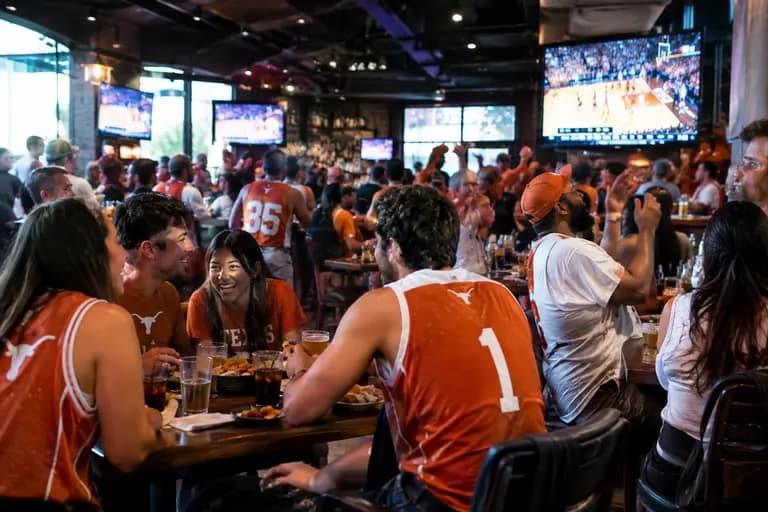
College basketball in Texas also reaches beyond the arena. Early-season games affect campus activity, restaurant traffic, alumni gatherings and high school players who want to see what a college role looks like up close. A strong November can help a program own attention before football completely releases its grip on local sports conversation. A choppy start can make every December adjustment feel louder.
The state’s player development scene will be watching, too. When in-state freshmen earn minutes at Texas, high school coaches notice. When Houston turns a transfer big into a dependable defender, club coaches can point to strength, footwork and rebounding discipline. When Tech builds around Toppin, young forwards across West Texas get an example of how production and physicality travel into high-major expectations.
Why Texas Basketball Programs Matter On November 1
The State Has Three Different Blueprints To Track
For Texas Basketball Programs, the value of November 1, 2026 is that the questions are still clean. Texas has to convert roster depth into order. Houston has to make its frontcourt fixes hold up against top competition. Texas Tech has to support a star without making the season feel like a one-man burden.
Those are different team-building paths, and that is good for the state’s basketball culture. Austin offers a roster construction story with recruiting and transfer balance. Houston offers a toughness story built around defense, rebounding and frontcourt depth. Lubbock offers a star-driven Big 12 test with a fan base that can turn home games into real pressure.
The 2026-27 season will sort the rankings later. On November 1, the sharper read is about fit. Which lineups make sense? Which newcomers defend well enough to stay on the floor? Which veterans help younger players settle? Those answers will shape the way Texas fans talk about college basketball from the first week of November through conference play.