


The GSE Academy Event is scheduled for September 26-27, 2026, in Houston, giving boys from 2nd through 12th grade a two-day setting built around games, evaluation and media exposure. The event is listed for Harvest Time at 17770 Imperial Valley Dr., Houston, TX 77060, with registration already closed as of September 21, according to the official event listing.
For coaches, the timing matters. Late September sits in a useful window for player evaluation because school programs, fall training, club teams and offseason development work are all close enough to compare. A two-day event cannot define a player, but it can help coaches identify habits that carry over across games: defensive effort, shot selection, body language, communication, rebounding activity and how a young guard or wing responds after a poor possession.
For Houston families, the event also shows how local basketball infrastructure continues to serve a wide range of ages. The field is not limited to high school prospects. Boys as young as 2nd grade are eligible, which gives younger players a chance to experience a structured event while older players can use the same setting to be evaluated against more serious competition.
Why The GSE Academy Event Matters For Houston
GSE Academy Event Format At A Glance
The GSE Academy Event is built with a simple value point for players and coaches: every player is guaranteed four games. That guarantee matters because one strong outing or one poor shooting game can distort an evaluation. Four games give coaches a better chance to see how players settle into competition, adjust to physicality and contribute when the game does not run through them.
The event is open to Elite, Competitive and Developmental levels. That structure is important because youth basketball often mixes players who are at very different stages. Some athletes are already comfortable in high-pressure games. Others are still learning spacing, defensive positioning and how to make reads without rushing. A level-based setup gives coaches a clearer way to watch players within a setting closer to their current development stage.
- Dates: September 26-27, 2026
- Location: Harvest Time, 17770 Imperial Valley Dr., Houston, TX 77060
- Eligible players: Boys from 2nd through 12th grade
- Entry fee listed: $125 per player
- Game guarantee: Four games per player
- Levels: Elite, Competitive and Developmental
- Status as of September 21, 2026: Registration has closed
Why The Location Matters
Houston already sits at the center of a deep basketball market. Families can find school programs, club teams, trainers, recreation leagues and weekend events across the metro area. What separates an event like this is the combination of age range, game volume and exposure features in one venue.
Harvest Time’s north Houston location also matters from a practical standpoint. For many local families, staying inside the metro area reduces the cost and pressure that come with travel tournaments. Hotel stays, long drives and weekend meal costs can add up quickly. A Houston-based setting can make evaluation opportunities more accessible for players whose families are already managing school schedules, club fees and transportation demands.
How The GSE Academy Event Format Supports Evaluation
Four Games Create A Better Sample
At a GSE Academy Event with a four-game guarantee, the best evaluation may not come from who scores the most. Coaches often learn more by watching what a player repeats. Does a young guard organize teammates after a turnover? Does a forward keep boxing out when touches are limited? Does a shooter defend hard when the jumper is not falling? Those details show up more clearly across multiple games than in a single run.
For younger players, four games can also test stamina and focus. A 2nd or 3rd grader may not be judged the same way as a varsity-level prospect, but coaches and parents can still see whether the player listens, competes and keeps trying to make the right play. At the high school level, the same format gives evaluators more possessions to track decision-making, pace and consistency.
The event’s Elite, Competitive and Developmental labels should help coaches frame what they are watching. Developmental players may need more teaching and patience, while Elite-level players may be evaluated more closely on advanced reads, physical tools and repeatable production. The key is matching expectations to the level rather than treating every player as if they are at the same stage.
Media Work Can Help Track Players
The event listing says players will receive write-ups, interviews and more through GSE Media, Leaderboard and The Baseline Report, and it identifies the event as “exposure certified” on the GSE Academy page. That kind of coverage can be useful, but it should be read with context.
Media exposure does not replace coaching evaluation. A write-up can introduce a player’s name, note strengths or record a standout performance. An interview can show confidence, communication style and personality. Still, coaches should pair those materials with live evaluation, film review and conversations with people who know the player’s day-to-day habits.
For players, the interview element has value beyond attention. Young athletes often need practice explaining who they are as competitors. Can they talk about their role? Can they describe what they are working to improve? Can they handle a question after a difficult game? Those are not box-score skills, but they matter as athletes move into more serious team environments.
What Coaches Can Learn From The Two-Day Setup
Reading Levels Without Overreacting
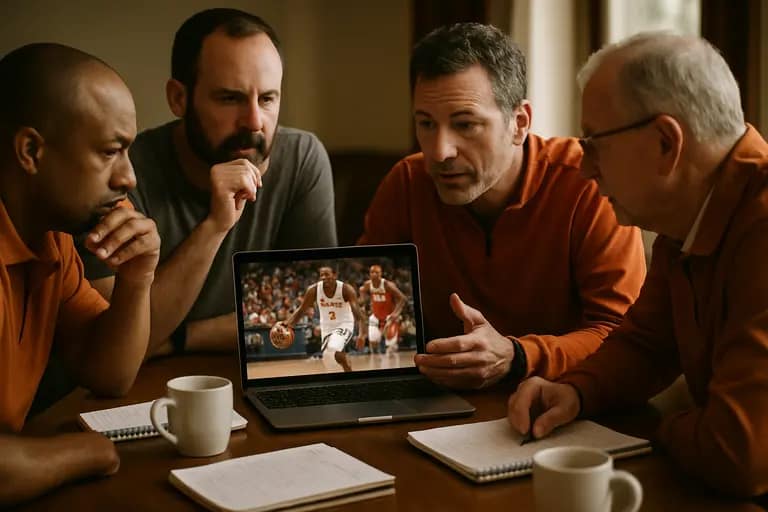
Coaches attending a two-day youth event should be careful not to overrate one hot shooting stretch or dismiss a player after one poor game. The better approach is to track patterns. A player who sprints back on defense every time is telling you something. So is a player who stops moving when the ball does not come his way.
The wide age range also requires a different lens. A 2nd-grade player may show coachability through listening and effort. A middle-school player may show promise through coordination, passing feel and defensive awareness. A high-school player may need to show sharper reads, stronger communication and a clearer understanding of role. The event puts those stages under one roof, but coaches still need to separate evaluation standards by age.
The best local coaches I know use these settings to build notes rather than make instant declarations. They watch warmups. They watch huddles. They watch how players treat teammates. They pay attention to who responds well to correction. In youth basketball, those habits can matter as much as a single scoring total.
What Families Should Take From Closed Registration
Registration being closed as of September 21 means families who are not already entered should not treat this as an open sign-up opportunity. For those with players in the field, the focus should shift from registration logistics to preparation: rest, hydration, punctuality, uniform readiness and a clear understanding of the schedule once it is provided through event channels.
Parents can also help by keeping the experience grounded. Exposure events can create pressure, especially for older players who want to be noticed. The healthiest approach is to treat the weekend as a chance to compete, learn and collect feedback. A good event performance can create useful attention, but long-term development still comes from consistent practice, coaching and academic responsibility.
For local teams, this event can also serve as a measuring point. Coaches may identify players who need more ball-handling work, stronger conditioning or better off-ball habits. Players may leave with a clearer view of where they stand against peers from other programs. That kind of feedback is valuable if it leads to specific work after the weekend ends.
What The GSE Academy Event Means For Houston Hoops
The GSE Academy Event fits a larger Houston basketball story: the city has enough young athletes to support events that serve both early development and serious evaluation. Putting boys from 2nd through 12th grade in a structured two-day setting gives coaches a chance to observe a broad talent pool while giving families a local option that does not require leaving the metro area.
The event’s value will come from how well players use the opportunity. Four games give athletes room to recover from mistakes, show consistency and compete in different situations. Media features can help players become easier to track, but the strongest impression still comes from effort, decision-making and coachability.
For Houston coaches, the weekend should be less about instant labels and more about building a clearer picture of local player development. For families, it is another sign that meaningful basketball opportunities do not always have to start with a long drive out of town. If the event runs as listed on September 26-27, it will give young players a stage, and it will give the local basketball community another useful look at where the next group of Houston athletes is growing.