


Texas Exposure Camps have become a serious part of the state’s youth basketball calendar, not because one event can make a prospect, but because the right setting can put a young player in front of coaches, evaluators and media while still testing habits that show up in real games.
That distinction matters for Texas families. Camps and showcases now range from compact academic events for older student-athletes to one-day exposure stops for elementary and middle school players. Some are built around evaluations and rankings. Others lean into skill work, academic fit and college-coach access. The best events do not replace school teams, club programs or daily coaching. They give those efforts another stage.
As of Sept. 23, 2026, the recent Texas camp calendar also shows how localized the exposure model has become. Late-summer and fall events touched the Dallas area, South Texas, Houston, East Texas, DFW, Austin and San Antonio-area markets. For a state as large as Texas, that geographic spread can reduce travel pressure while giving coaches more chances to see players outside the largest metro circuits.
Texas Exposure Camps Are Becoming A Local Talent Filter
What Texas Exposure Camps Show About Academic Fit
The AOG × The Players Tribe Texas High Academic Camp, held in the Dallas area in late August 2026 for grades 8–12, drew 100 academically focused prospects and included college coaches, scouts and media, according to The Players Tribe report. The size of that field is worth noting. A 100-player event is not a mass cattle call. It can create a tighter evaluation setting where coaches can watch players repeat drills, communicate in competitive segments and show whether their academic profile matches the level of school recruiting them.
That academic piece is becoming more valuable in Texas basketball. A player’s transcript, test plan and school fit can shape which college programs are realistic long before a highlight clip circulates. The Dallas-area event pointed toward a model that treats exposure as more than points, dunks or social-media clips. For families comparing camps, that is a useful standard. If an event claims to help recruiting, it should make room for academic context as well as athletic evaluation.
Why Smaller Fields Can Matter
The best Texas Exposure Camps are not always the largest. Smaller events can help evaluators spend more time with each player, especially in grades 8–12, when college fit and development pace become clearer. A compact field also puts pressure on athletes to compete every rep. There are fewer hiding places when the gym is filled with players who were selected for a similar purpose.
For more on that specific Dallas-area model, our prior coverage of the Texas High Academic Camp looked at how the event connected student-athletes with coaches, media and academic-centered exposure.
What Recent Texas Events Show About Access
One-Day Formats Lower Travel Friction
Recent camp scheduling across Texas shows a strong move toward one-day exposure formats. Uncommon Basketball listed fall 2026 Texas stops that included South Texas at TAMU-Kingsville on Aug. 30, Houston on Sept. 6, East Texas at Tyler Junior College on Sept. 20, DFW on Sept. 27, Austin on Oct. 11 and an Alamo City finale on Oct. 18. By Sept. 23, 2026, the South Texas, Houston and East Texas dates had already passed, while the DFW, Austin and Alamo City stops remained dated later on the calendar.
That structure has practical value. A one-day event can be easier for families than an overnight camp or a long tournament weekend. It can reduce hotel costs, missed school time and the strain on parents who are already balancing club fees, school sports, gas and meals. It also lets players test themselves without asking families to commit to a full multi-day trip.
Age Groups Are Getting Younger
Some Texas exposure events are also reaching younger players. The Players Tribe’s 2026-27 camp and showcase tour information included grades 3–9 for certain exposure camps, with a Houston Exposure Camp dated Jan. 30, 2027. That does not mean third- or fourth-grade athletes should be treated like college prospects. It does show that evaluation language has moved earlier into the youth game.
That shift needs balance. Younger athletes benefit most when exposure events reinforce fundamentals, coachability and competitive effort rather than pushing recruiting pressure before it is appropriate. For coaches and parents, the question should be simple: did the player leave with useful feedback, better habits and a clearer view of the work ahead?
Girls Basketball Participation Adds Urgency
Why The High School Drop Matters
The exposure conversation is not only about boys basketball. Girls basketball in Texas faces a participation challenge that should matter to every local program. The Associated Press reported that girls high school basketball participation in Texas dropped by at least 21% since 2000, from about 70,427 players in 1999–2000 to 44,953 players in 2024–25, even as the number of schools rose from 1,175 to 1,373 AP data on girls basketball.
That decline changes how we should view camps and showcases. If fewer girls are staying in the traditional high school participation pipeline, exposure events may serve a larger role in keeping players connected to competition, instruction and visibility. They cannot fix participation by themselves, but they can give motivated athletes more places to be seen and more reasons to stay engaged.
Equity Questions For Families
Access remains the hard part. Camp fees, travel and equipment can limit who benefits from exposure. Research notes on Texas youth events showed a wide range of prices across 2026 camp listings, with many camps aimed at youth and middle school players. Even a one-day camp can be expensive for a family with multiple children in sports.
That is why community-based events, school partnerships and low-cost training options still matter. A healthy Texas basketball pipeline cannot depend only on families with the resources to chase every showcase. Local gyms, school coaches and nonprofit partners can help make exposure less tied to ZIP code and income.
What Families And Coaches Should Measure
Camp Value Beyond Rankings
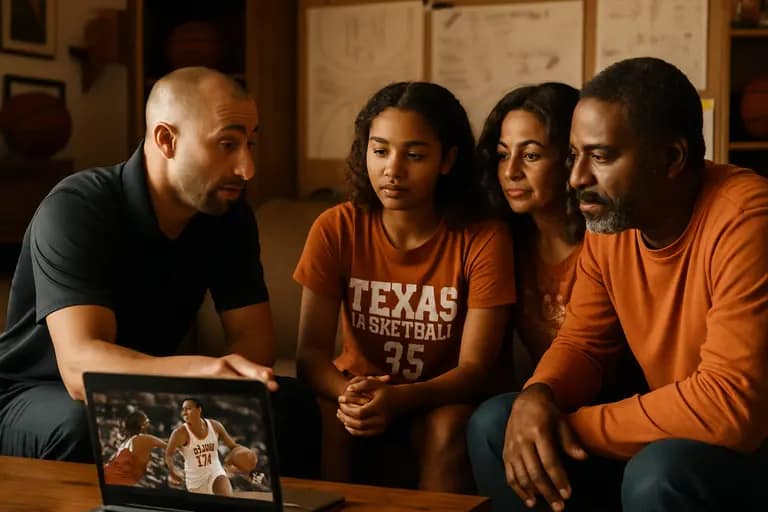
Rankings and awards get attention, but they should not be the only measure of value. A player can have a productive camp without making a top-performer list. Coaches should watch how athletes respond to corrections, defend away from the ball, communicate in transition and handle mistakes after missed shots.
- Did the event provide direct feedback or only social-media recognition?
- Were players grouped by skill level, grade or both?
- Did the schedule allow enough live play for evaluation?
- Were academics, character and coachability part of the assessment?
- Was the cost reasonable compared with the instruction and exposure provided?
Local Coaches Still Drive Growth
For all the attention around showcases, player development still happens in regular practices. A camp can identify a weakness, but a school coach or club coach helps fix it through repetition. A camp can introduce a player to college-level expectations, but the player’s daily habits determine whether that lesson sticks.
That is the best way to frame exposure in Texas. These events are checkpoints, not finish lines. They can sharpen motivation, create useful contacts and show players where they stand. They should feed back into the local training plan once the event ends.
Why Texas Exposure Camps Matter For Local Talent
The Texas Basketball Takeaway
Texas Exposure Camps cannot replace school basketball, club competition or year-round coaching, but they can connect those parts of the development path. The recent camp activity across the state shows demand from families, organizers and evaluators for more local ways to identify talent.
The strongest events will be the ones that keep basketball standards high while remembering the student-athlete behind the jersey. That means clear evaluation, real instruction, academic awareness and access that does not shut out families with tighter budgets.
For Texas basketball communities, the task is to treat exposure as a tool rather than a shortcut. When camps are built with purpose, they help coaches find players, help families understand the process and help young athletes see what the next level asks of them.