

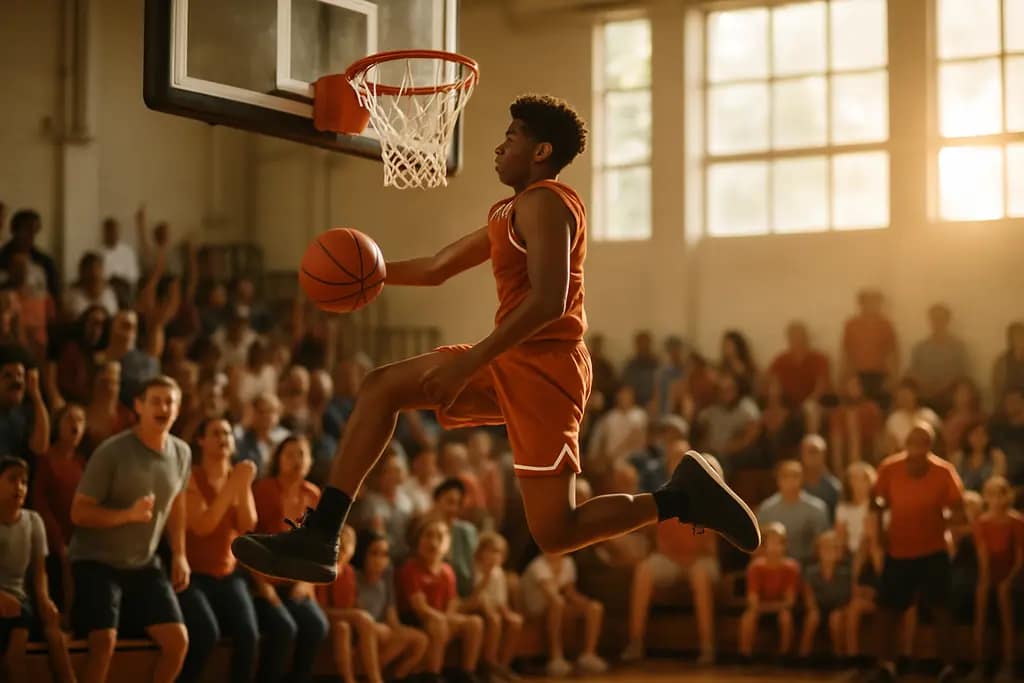
Fall Hooptacular gives Houston basketball a clear community angle on Saturday, October 24, 2026, from 4:00 to 8:00 p.m. at Fondé Community Center, 110 Sabine St. As of October 5, 2026, the event is still scheduled as an upcoming gathering, and its structure says plenty about where local hoops can create value beyond the scoreboard.
The Soleties Basketball event is built around an 8-team tournament, but the draw stretches past the bracket. The official event listing includes a Vendor Village, local businesses, food trucks, music, trick-or-treating, family activities and entertainment, with proceeds supporting Soleties Basketball programming and its planned inaugural basketball league event details.
That combination matters in Houston because basketball events often serve two audiences at once. Players want competition. Families want a reason to stay engaged around the gym. Local vendors want access to a crowd that already shares a neighborhood interest. When those pieces are organized in the same window, a four-hour event can become a useful connector for teams, parents, coaches and community partners.
What The Fall Hooptacular Says About Local Hoops
Fall Hooptacular Tournament Structure Keeps It Accessible
An 8-team setup gives the event a basketball center without turning the day into a large, hard-to-follow tournament. Smaller fields can be easier for families to track, especially when the event is paired with children’s activities and vendor space. That matters for a community gym setting where people may be moving between games, food trucks and family programming rather than sitting through a full-day tournament schedule.
The listed player registration is $15, with tournament player entries limited to 40 players. General admission is listed at $10, kid’s admission is $5 and vendor spaces are $75. Those price points show the event is trying to balance organized competition with public access, while still creating revenue to support Soleties Basketball programming.
From a basketball standpoint, the limited player number also gives the tournament a defined shape. Coaches and organizers can keep games moving, players can expect a more controlled event environment, and families can plan around a four-hour block rather than a long day with uncertain game times.
Fondé Community Center Gives The Event A Houston Base
Fondé Community Center gives the event a recognizable city setting near central Houston. For local hoops culture, venue choice matters. A community center does not feel like a distant neutral site. It feels like a place where families, neighborhood groups and recreational athletes can share space with organized basketball.
That setting fits the Soleties Basketball pillars listed with the event: Faith, Accountability, Community, Consistency and Empowerment. Those words are not box-score stats, but they do help explain how the event is being framed. The basketball games are one part of a broader attempt to create repeatable community programming around sport.
Texas basketball has plenty of large showcases, travel tournaments and school-based events. The community-center model works differently. It can lower the social barrier for families who may not be tied to a club program or school team but still want to be around the game. That is where local sports culture often grows strongest: not only through elite competition, but through shared access.
Why Soleties Basketball Fits Houston’s Community Model
Run Club Roots Create A Wider Sports Network
Soleties Basketball sits under a broader Soleties community structure, and that matters for how the event may function. The Soleties Community Hub Fund describes the organization’s free weekly Houston runs as drawing 300 to 500 people each week community fund. That gives the basketball program a connection point beyond people who already play the sport.
In practical terms, a group that already gathers hundreds of people around movement has a head start on building a basketball audience. Some attendees may be players. Some may be parents, runners, vendors or community supporters. That blend can create a different feel from a tournament that only reaches rostered athletes and their immediate families.
Houston is built for this kind of crossover. The city’s sports scene is spread across schools, parks, churches, rec centers, training gyms and social groups. Basketball can benefit when organizations connect those spaces instead of treating each event as a separate island.
For readers who follow how local access develops across the state, this lines up with a wider pattern in Texas youth basketball, where free training, community leagues and nonprofit coaching can help build trust before families commit deeper time and money to the sport.
Family Programming Can Keep Fans In The Gym
The Vendor Village, trick-or-treating, food trucks and entertainment are not side pieces from a fan engagement view. They help answer a common question for local basketball events: Why should the whole family stay?
Younger siblings may not care about every possession. Parents may need food options. Local businesses need foot traffic that lasts longer than one game. Family activities help stretch the event from a tournament stop into a community outing. That keeps energy inside the building and around the venue, which can help teams feel supported even in a smaller setting.
For players, that atmosphere can matter. A local tournament with music, families and vendors can feel more meaningful than a standard run of games. The stakes are still recreational or community-based unless the organizer says otherwise, but the environment can encourage players to compete with pride. That is especially valuable for an organization trying to build an inaugural league.
How Local Vendors And Teams Benefit

Small Business Presence Adds Sports Economy Value
Local sports events do not need stadium crowds to create economic value. A vendor space at a basketball-centered event gives small businesses access to families who are already gathered around a shared interest. The listed $75 vendor space price suggests Soleties is making room for local business participation rather than building the event only around admission and player fees.
For Houston’s neighborhood sports economy, this is where community programming can stretch its reach. A food truck, apparel seller, wellness brand or local service provider can meet people in person, while families see businesses connected to the same sports community their children or friends are part of.
The basketball tournament is the anchor. The vendors help keep the event from becoming a quick in-and-out gym stop. That is a useful model for smaller organizations that want to build loyalty around programming instead of relying only on one tournament day.
League Planning Gives The Tournament More Purpose
The proceeds are listed as support for Soleties Basketball programming and the organization’s upcoming inaugural basketball league. That gives the event a development angle. It is not only about who wins on October 24. It is also about whether the organization can create enough local buy-in to support repeat basketball opportunities.
For teams and players, a league can offer continuity that one-day events cannot. Regular competition creates rhythm. Coaches can evaluate improvement over time. Players can build chemistry. Families can plan around a known schedule. If Soleties can connect its community base with organized basketball operations, the Hooptacular can serve as an early public test of interest.
- Players get a structured tournament setting with a limited field.
- Families get fall activities tied to basketball rather than separated from it.
- Vendors get access to a sports-focused local crowd.
- Soleties Basketball gets a platform to support future programming.
That mix is worth watching across Houston. The strongest local programs are often the ones that make basketball feel connected to the rest of community life.
Why The Fall Hooptacular Matters For Houston Hoops
The Fall Hooptacular matters because it treats basketball as both competition and gathering space. Houston has enough athletes, families and neighborhood organizations to support that approach, but the execution has to be clear. The date, time, venue, ticket tiers and event pieces are all public, which helps families and vendors understand the plan before they commit.
The basketball piece gives the day its identity. The community pieces give it reach. If the 8-team tournament runs smoothly and the surrounding activities keep families engaged, Soleties Basketball can use the event as a bridge toward its league ambitions.
There is still uncertainty because the league has not yet been described in detail through the provided event information. The supported claim is narrower: proceeds from the October 24 event are intended to help Soleties Basketball programming and its planned inaugural league. That is enough to frame the Hooptacular as a meaningful early step, not proof of a fully built league structure.
For Houston basketball fans, the value is local and practical. Events like this can introduce players to organized competition, give families a reason to gather around the game, and give local businesses a place inside the sports conversation. If Soleties continues building from its broader movement-based community into basketball, the Fall Hooptacular could become one of those small calendar points that helps connect the city’s gym culture with its neighborhood culture.