


The RELLIS water tower will not help Texas A&M Basketball make a defensive rotation, win a rebounding battle or close a late-game possession. That is the right starting point. The new utility project approved for Texas A&M-RELLIS is not a basketball building, not a practice gym and not a recruiting lounge. Its value to Aggies basketball sits one step removed: it supports the kind of campus growth coaches can point to when recruits and families ask whether a university is still investing in its long-term future.
That matters in College Station and Bryan because recruiting is rarely about one building or one speech. Prospects judge the head coach, player development plan, schedule, academic fit, housing, support staff and the feel of campus life. Infrastructure does not replace any of that. It can, however, strengthen the broader case that Texas A&M is building capacity for a larger academic and research community.
Why The RELLIS water tower Matters To Recruiting
The RELLIS water tower Is Not A Practice Facility
The first recruiting lesson is restraint. Coaches should not sell a utility project as if it were a new player performance center. A recruit choosing between SEC programs is still going to ask about playing time, development, system fit, strength training, nutrition, competition and the path to meaningful minutes.
The RELLIS water tower does not directly change those basketball answers. It does not add shooting space. It does not shorten the walk from the locker room to the court. It does not create a new arena experience for families visiting Reed Arena. Any pitch that treats it as an athletics upgrade would stretch the point.
Where it does fit is the larger institutional story. Texas A&M can show that its system is adding capacity in areas beyond athletics, especially at RELLIS, where large-scale academic and research projects are part of the campus plan. For a staff member sitting with parents, that can support a message about stability, investment and the future of the university around the athlete.
Campus Quality Still Enters The Conversation
Recruiting research supports the idea that prospects care about more than the roster. A University of North Dakota thesis on factors influencing collegiate basketball player recruitment identified athletic facilities and academic or campus quality among the factors tied to recruiting decisions collegiate basketball recruitment study. That does not mean a water tower swings a commitment. It means the campus environment is part of the total picture.
Families often ask practical questions on visits. Is the school growing? Are academic spaces modern? Does the institution feel organized? Are support services keeping pace with enrollment and research ambitions? Coaches cannot answer all of that with basketball language. They need the campus around them to support the message.
For Texas A&M Basketball, the more honest angle is this: a strong university setting gives the program more to stand on. Basketball prospects still need to believe in the coaching staff first. Once that baseline exists, broader campus investment can help confirm that the school is not standing still.
What Texas A&M Approved At RELLIS
Capacity, Pressure And Fire Protection
On September 3, 2026, the Texas A&M System Board of Regents approved construction of a 1-million-gallon water tower at the RELLIS Campus, replacing an older 300,000-gallon structure A&M System water tower approval. The system said the project will raise water storage capacity by more than three times and provide higher pressure for fire protection and irrigation tied to future expansions.
Those details are not flashy, but they are the kind of basics that make campus growth possible. Larger buildings, expanded research operations and more active campus services need dependable utilities. If a campus is planning for more people, more projects and more daily use, water storage and pressure become part of the foundation.
That is why the RELLIS water tower should be read as an enabling project. It supports the conditions around growth rather than serving as the visible growth itself. Coaches may never lead a recruit to a utility site. They can still talk about the campus investments it supports.
The March 2028 Completion Window
The A&M System said construction was set to begin in September 2026, with substantial completion expected in March 2028. That timing matters for recruiting. The effect, if there is one for basketball, would be gradual and indirect.
Current recruits will not choose Texas A&M because a tower is under construction. Classes moving through the 2028 and 2029 recruiting cycles may see more of the finished RELLIS growth story, depending on how the campus develops around the project. Even then, the basketball staff’s main job remains the same: connect prospects to a role, a development plan and a team culture.
The practical recruiting value sits in the phrase “proof of investment.” Coaches can say the university is putting money into long-term infrastructure, not only short-term promotion. That message carries more weight when paired with visible academic spaces, consistent athletic support and a clear plan for the player.
How Coaches Can Use Infrastructure Honestly
A Support Point, Not The Main Pitch
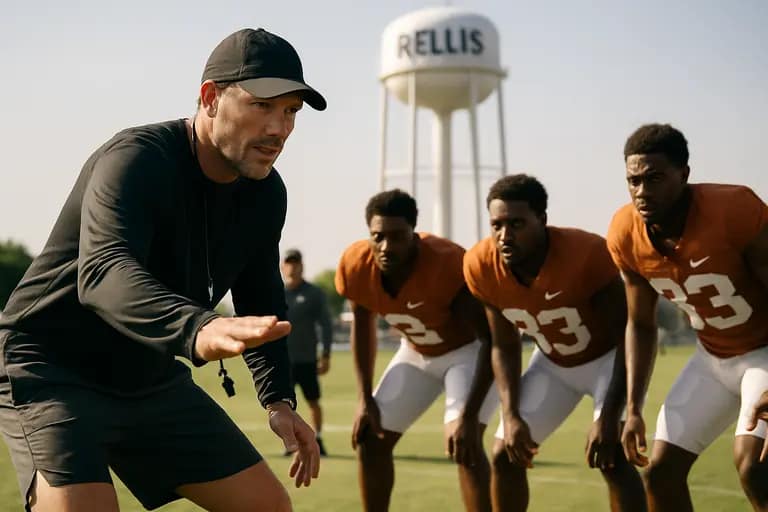
The best recruiting staffs know the difference between a headline and supporting evidence. A headline might be a coach’s player development record, an SEC schedule, a role in the offense or the chance to compete in high-pressure games. The RELLIS water tower belongs in the supporting evidence category.
That does not make it meaningless. Texas prospects and their families often value the full school experience. Many are not only picking a jersey; they are picking a campus, degree path, support network and community. A basketball program housed inside a growing university can use that to build trust, so long as the pitch stays grounded.
That trust is tied to consistency. If a coach claims every campus project is a direct win for basketball, recruits will hear the salesmanship. If the coach says Texas A&M is investing in the university’s long-range capacity while the basketball program handles its own development work, the message is more credible.
Academic Fit And Program Stability
RELLIS is tied in the research notes to broader campus development, including the STEM Education & Research Center that opened in March 2026 and the planned Texas A&M Semiconductor Institute. The water project supports utility needs connected to expansion at that campus. For basketball recruiting, the academic angle matters most with prospects who value engineering, technology, research or applied learning paths.
A coaching staff does not need to turn every recruit into a research prospect. It does need to understand each family’s priorities. For one player, the key may be guard development. For another, it may be academic credibility. For another, it may be whether the campus feels like a place where the athlete can mature over three or four years.
That is also where schedule and competition fit the pitch. Texas A&M’s broader basketball case includes how the program manages high-major games, travel and SEC demands. Our breakdown of how the SEC-ACC Challenge shapes Texas A&M strategy connects to that same recruiting conversation: serious prospects want to know how the program prepares for top-level opponents.
What This Means For Aggie Basketball Growth
Local Identity Meets Institutional Investment
The Bryan-College Station sports community tracks basketball through wins, roster movement, March expectations and recruiting weekends. A water project at RELLIS will not move the fan base the way a key signing or postseason run would. Still, local fans understand that Texas A&M’s athletic identity is tied to the size and ambition of the university around it.
That is where the RELLIS water tower has relevance. It signals that campus growth requires unglamorous work before the more public pieces arrive. Fans may see new buildings, research announcements or industry partnerships. Behind those pieces sit utility decisions that allow a campus to function at a larger scale.
For basketball, the recruiting impact should be framed as additive. It adds one more proof point to a university investment story. It does not replace NIL strategy, coaching relationships, player evaluation, academic support or on-court development. It does not promise a recruiting jump by itself.
What Coaches And Fans Should Watch Through March 2028
Between September 29, 2026, and the expected substantial completion in March 2028, the useful questions are clear:
- Does RELLIS continue adding academic and research activity that recruits can understand during campus visits?
- Can Texas A&M Basketball connect campus growth to specific academic paths for athletes without overstating the sports impact?
- Do coaches keep the recruiting pitch centered on development, fit and competition while using infrastructure as background support?
- Do local fans see stronger ties between university growth, regional pride and the Aggies’ place in Texas basketball?
If those answers trend in the right direction, the project becomes part of a larger recruiting environment. Not the centerpiece. Not the reason a guard signs. Not the reason a forward chooses College Station over another SEC school. But part of the evidence that Texas A&M is building for scale, reliability and long-term institutional strength.
That is the fair basketball read. The RELLIS project is a utilities decision first. Its sports value comes from the way coaches can place it inside a wider story about a university growing around its teams. In recruiting, that kind of story rarely wins alone. It can help a staff reinforce the message that the athlete is joining a program backed by a school still investing in what comes next.