


Texas District Play rarely begins from a blank page. By the time league games carry playoff weight, early performances have already shaped confidence, rotations, local expectations and how rival coaches prepare. Across Texas high school sports in 2026, football openers, baseball all-district honors and winter basketball records all offered reminders that momentum often starts before the first district rematch.
That does not mean one opening win or one award decides a race. Texas districts are too deep for that. Injuries, travel, weather, matchups, academic calendars and coaching adjustments all change the rhythm. Still, early standouts help communities identify which teams have the roster balance, player development and competitive habits to handle league pressure.
For basketball readers, the cross-sport view matters. The same ideas that show up in football and baseball carry into Texas gyms: proven creators, defensive anchors, reliable role players and schools with enough depth to survive tight weeks usually separate themselves once district play becomes routine.
How Texas District Play Turns Early Results Into Momentum
Why Texas District Play Rewards Early Proof
Early results are useful because they give coaches evidence. A football staff can see which young players handle varsity speed. A baseball coach can learn which arms can protect a district lead. A basketball program can identify whether its bench can guard without fouling or whether a second ball-handler can survive pressure.
Recruit Intel reported that on Texas high school football opening weekend, August 28, 2026, more than 1,400 performances were recorded across 209 schools, with the five top Recruit Performance Metric scores pulled from that weekend’s box scores opening weekend performers. That scale shows how quickly a statewide conversation can form around players before district standings are fully built.
For Texas District Play, that matters because coaches do not prepare from reputation alone. They adjust to what film shows. A sophomore who wins one-on-one matchups in late August can force opponents to shade coverage by October. A point guard who controls pace in December can change how district rivals press in January. A pitcher who dominates early district innings can alter how opponents stack their lineups.
What Fans Can Read From The First Signals
Local fans should treat early standouts as clues, not verdicts. The most useful signs are repeatable. Explosive plays matter, but consistency across several weeks tells a stronger story. In team sports, early momentum becomes more valuable when it reflects structure rather than one hot night.
- Depth: more than one athlete producing against quality opponents.
- Role clarity: stars, defenders, shooters, linemen or pitchers fitting clear assignments.
- Response: teams holding form after an upset, road trip or rivalry result.
- Balance: offense and defense improving at the same time.
Those markers help explain why league races can shift fast. An early upset may draw attention, but the teams that keep building usually have multiple answers once opponents adjust.
Football Openers Show Why District Races Shift Fast
Early Rankings Are Snapshots, Not Guarantees
The August 30, 2026 Class 6A power picture in the research placed Waxahachie at No. 1 statewide, with Galena Park North Shore, Sheldon C.E. King, North Crowley and Humble Summer Creek also near the top. The same notes identified Allen’s 26-7 season-opening win over preseason No. 6 Duncanville as a result that changed early perception.
That kind of result has a direct impact on district conversations. It can raise the standard inside a locker room, bring more attention to local practices and force district opponents to account for a team’s confidence. It can also add pressure. Texas high school players are still teenagers, and staffs must turn a major win into weekly discipline rather than celebration that lingers too long.
The research also pointed to preseason district MVP names in Class 2A football. Jailen Vasquez of Spearman was listed after nearly 1,300 passing yards, more than 1,000 rushing yards and 21 total touchdowns. Camden Ables of Hawley was noted with 45 receptions, 792 yards and 12 touchdowns. Those preseason labels did not decide the 2026 races, but they showed where rival coaches likely began their scouting attention.
Programs with several high-level prospects face a similar challenge. Duncanville was listed with five players on the 2026 DCTF Rising 100, while South Oak Cliff had four, with Frisco Lone Star and Georgetown also noted among talent-heavy programs. Depth can create district advantages, but it still has to become clean execution on game night.
Baseball Honors Offer A Map For Sustained Team Strength
Keller’s Award Spread Shows The Value Of Balance
Baseball gives one of the clearest examples of how district performance becomes visible after the season. In Dallas-area District 4-6A honors published on June 24, 2026, Keller’s Cole Koen was named MVP, Logan Brown was Offensive Player of the Year and Conner Davenport was Pitcher of the Year, while Byron Nelson’s Sebastian Castillo was Defensive Player of the Year Dallas-area all-district honors.
That distribution says a lot about team momentum. Keller was not represented only by one standout bat. The honors reflected production across key baseball jobs: run creation, pitching and the central all-around value of an MVP. In district league play, that balance is often the difference between a strong week and a strong season.
The research also noted that the March 29, 2026 THSBCA poll had Tomball at 23-0-1 with a 7-0 district record and Keller at 22-1-2 with an 8-0 district record. Kingwood, Cypress Woods and Waxahachie were also listed with undefeated district records at that point. Those numbers came before the spring postseason story was complete, but they showed how dominant district starts can create a local belief that every game is part of a larger run.
For community fans, baseball momentum can feel different from football or basketball because district series test patience. A team may win with pitching one night, defense the next and situational hitting after that. The programs that hold up best often have enough player development to win more than one type of game.
Basketball Lessons For Texas Teams And Programs
DFW Hoops Records Show How Consistency Travels Across Sports
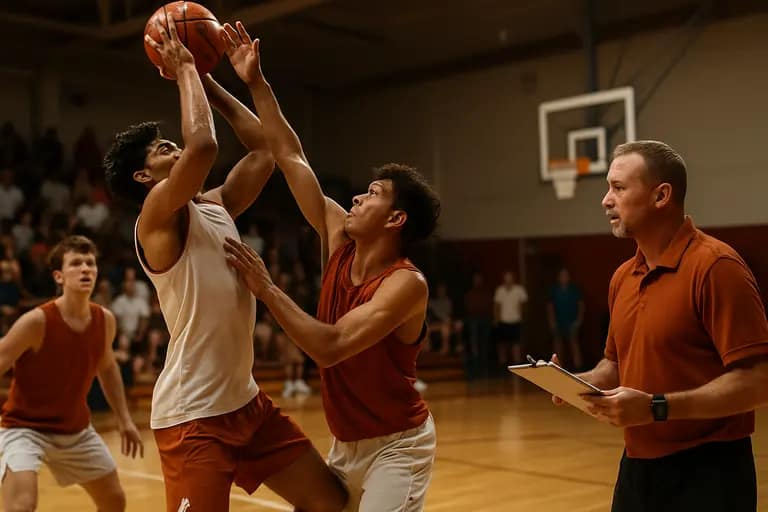
The basketball piece of the 2026 research centered on January district play in the Dallas-Fort Worth area. North Crowley was 20-3 overall and unbeaten in district around the midpoint of league play, while Little Elm was 21-2 overall and also unbeaten in district. Those records fit what Texas basketball coaches value most once the schedule tightens: reliable guard play, defensive habits and enough depth to handle quick turnarounds.
For basketball families, Texas District Play can be the clearest measure of a program’s daily standard. Tournament wins and non-district tests matter, but league opponents know personnel, sets and tendencies. By the second meeting, easy actions usually disappear. Teams have to win with counters, late-clock decision-making and trust built in practice.
That is why district structure has become such a major part of local fan identity. Rivalries, travel and school alignment affect the week-to-week experience, a point connected to broader UIL conversations about district realignment and rivalries. A short road trip against a familiar opponent creates a different gym than a long midweek drive. Both can shape how players handle pressure.
Basketball also magnifies role development. A football roster can hide some inexperience through formation and substitution packages. Baseball can ride a hot arm. In basketball, a weak closeout, missed box-out or rushed pass can flip a district game in seconds. That makes early standouts valuable not just because they score, but because they stabilize possessions when the gym gets loud.
What Texas District Play Means For Local Fans
Texas District Play gives communities a weekly scoreboard for more than wins and losses. It shows which programs are developing athletes, which coaches are adjusting and which schools have built enough depth to withstand rivalry pressure. The 2026 examples from football, baseball and basketball all point to the same lesson: early standouts matter most when their production connects to team habits.
Fans can expect district races to keep rewarding balance. A headline player can lift a team, but league success usually asks for more: second options, defensive trust, bench minutes, pitching depth, special teams or late-game poise. The schools that turn early promise into steady district results are the ones that give their communities the strongest reason to keep filling bleachers and gyms.
For Texas basketball programs, the message is familiar. North Crowley and Little Elm showed in January 2026 how unbeaten district starts can confirm a team’s standing. Across sports, the same pattern holds. Early performances start the conversation, but district play tests whether that momentum belongs to one night or to a program.