


Texas Recruits are not just names on a commitment list. For Texas fans, high school coaches, families and local programs, the 2026 class showed how in-state talent can shape the identity of a national contender while keeping community ties close to Austin.
By October 29, 2026, Texas held the No. 1 overall class nationally with 26 commits and 17 blue-chip players, according to the Redshirt Analytics recruiting tracker. That national ranking matters, but the local portion of the class gives it a different meaning for Texas supporters who follow Friday night football across the state.
Recruiting rankings often reward breadth. A program gains ground by signing players from several states, filling premium positions and winning battles against other national programs. Texas has done that in the 2026 cycle. The part that resonates inside the state is simpler: local players are still central to the roster-building plan.
Why Texas Recruits Set The Local Standard
Texas Recruits And Fan Identity
The strongest recruiting classes usually combine national reach with a reliable home base. Texas has always had the advantage of recruiting in a state with deep high school participation, large metro areas, small-town football commitment and year-round development. When a Longhorns class includes a sizable Texas high school group, fans can connect the roster to players they may have seen in district games, playoff runs, local showcases or regional coverage.
That connection matters because college sports are not followed only through rankings. They are followed through family ties, school pride and regional memory. A player from a Texas high school arrives with a story that many local fans already understand. His signing can pull attention from his hometown toward Austin, giving younger athletes a visible example of what the next level can look like.
Perfect Game reported that 12 of Texas’s 20 high-school commitments in its 2026 class snapshot came from Texas high schools, according to Perfect Game’s class report. Recruiting services can count classes differently, especially when transfers, high-school signees and commitment timing are separated. Even with that context, the reported in-state share points to a clear local theme.
Why The In-State Share Carries Weight
A majority local high-school share gives a coaching staff more than familiarity. It gives the program recruiting continuity. Texas high school coaches see which programs return calls, build honest relationships and evaluate players before national attention arrives. When a staff signs a strong group from within the state, it sends a message back into those gyms, weight rooms and field houses.
For the basketball audience on this site, the parallel is easy to recognize. The same principle appears every winter and spring when Texas high school basketball players turn strong local seasons into college opportunities. Talent evaluation starts in local gyms before it reaches national boards. Football has more roster spots and a different signing structure, but the community effect is similar. Local recruiting tells young athletes that their own competition level can be a credible path.
That is why the 2026 football class should interest more than football-only followers. It shows how Texas schools, coaches and families remain part of a statewide player development system. Our recent look at in-state recruiting impact made the same point from a local fan angle: hometown ties make recruiting easier to follow and harder to ignore.
The Player Development Signal In The Numbers
Blue-Chip Depth Changes Expectations
The Redshirt Analytics snapshot listed 17 blue-chip players among Texas’s 26 commits as of October 29, 2026. That ratio suggests the class was not built only through volume. It had high-end talent across the commitment group, which changes the way fans evaluate its potential impact.
Blue-chip labels are not guarantees. Player development still depends on health, coaching, positional fit, practice habits and how quickly a young athlete handles college strength and speed. Yet a deep blue-chip count gives a staff more margin. It creates competition in meeting rooms and on practice fields. It also reduces pressure on any one freshman to become an immediate answer.
For local fans, the more interesting point is how in-state players fit within that depth. When local prospects enter a strong class, they are not being asked to carry a rebuild alone. They join a larger group that can push each other. That can benefit players who need a redshirt year, a position adjustment or time to add strength before taking on larger roles.
Recruiting Counts Need Careful Reading
The public numbers around the 2026 class show why fans should read recruiting snapshots with care. One tracker counted 26 commits and 17 blue-chip players. Another report focused on 20 high-school commitments and identified 12 from Texas high schools. Those figures can both be useful while answering different questions.
The first number helps describe national class strength. The second helps describe local sourcing. A smart reading separates the two. A class can be nationally elite because it attracts talent from several states, and it can still carry a strong Texas identity because the in-state high school share remains large.
That balance is the heart of the 2026 conversation. Texas does not need to choose between recruiting nationally and protecting its home base. The best version of the program does both. It uses Austin’s reach to attract out-of-state talent while keeping Texas high school relationships strong enough that top local players see the Longhorns as a natural destination.
How Local Recruiting Builds Community Stakes
High Schools Gain A Shared Spotlight
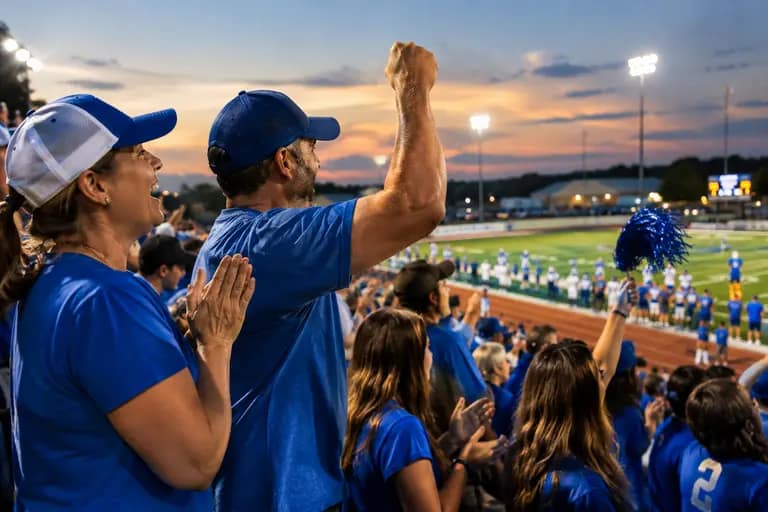
When a Texas high school player signs with a major in-state program, the moment belongs to more than the athlete. Position coaches, coordinators, strength staff, trainers, teachers and families share part of that achievement. Younger players inside the same school can point to a current example rather than a distant legend.
That local visibility can influence fan engagement across the state. A family in Pearland, Fort Worth, Temple, Katy, Waxahachie, Austin, Georgetown or Willis may follow Texas more closely if a nearby athlete is part of the class. The same happens in basketball when a local guard or forward signs with a Texas college and brings a school community with him.
Sports identity in Texas is often built at the local level first. College allegiance may be inherited, but player loyalty can be personal. A fan who watched a recruit as a sophomore or junior in high school follows his college development with a different kind of interest. That connection can keep communities engaged even when the player is waiting behind older teammates.
Local Talent Also Tests Development Standards
Signing local talent is only the first step. The next measure is whether those players improve after arriving. A strong in-state class raises expectations for strength training, position teaching and clear role development. Texas high school athletes often arrive with strong competition backgrounds, but college football demands faster reads, more complex assignments and greater physical consistency.
Fans should watch how the program handles that transition. Are young players retained? Are they developed patiently? Are they placed in roles that fit their strengths? Those questions matter as much as the star count attached to a signing class.
The local angle makes the answers feel closer to home. When an in-state player succeeds, it reflects well on his high school program and the broader Texas development path. When he needs more time, local followers often understand his background well enough to track the process with patience.
What Texas Recruits Mean For The 2026 Class
The 2026 class stood out nationally by October 29, 2026, but its local value comes from more than a No. 1 ranking. Texas Recruits gave the group a home-state spine that fans can follow from high school fields to college Saturdays. That matters in a state where local sports pride has always fed college attention.
The numbers available from the cited recruiting snapshots support a clear reading: Texas built a nationally strong class while keeping a significant portion of its high-school commitments inside the state. That is the kind of balance that keeps local coaches invested, gives families a reason to follow development and reminds younger athletes that the path from Texas high school competition to Austin remains visible.
For fans, the next useful lens is not hype. It is progress. Track how the local signees adapt, how the staff uses depth, and how many players turn early promise into lasting roles. Recruiting wins create the headline. Player development decides how long the story matters.