


OTR Exposure Events sit at an important point in Texas high school basketball: the place where team competition, player visibility, family support and local gym culture all meet. For Houston, Dallas-Fort Worth and nearby basketball communities, exposure events are not just extra games on a calendar. They can shape how athletes are evaluated, how programs build identity and how families connect with the sport beyond the school schedule.
That matters because high school basketball development is rarely built through one setting. A player grows through school practice, club competition, offseason training, strength work, film study and the quality of games available nearby. Exposure events can add a public stage where coaches, scouts and media see how athletes respond to speed, pressure and unfamiliar opponents.
For Texas families, the local value is practical. A well-run event can reduce travel strain, give smaller programs a chance to test themselves and bring basketball traffic into neighborhood gyms, school facilities and sports complexes. The best version of the model supports athletes without making the sport feel out of reach for families who already manage fees, uniforms, transportation and weekend schedules.
Why OTR Exposure Events Matter Locally
A Platform Built Around Multiple Entry Points
The value of OTR Exposure Events begins with structure. OTR Exposure says it was founded in 2018 and offers tournaments, showcases, camps and an NCAA-approved scouting service, according to its official about page. That mix matters because not every player needs the same type of event at the same stage of development.
A freshman trying to adjust to varsity pace may need competitive reps and feedback more than rankings attention. A junior with college-level tools may need stronger matchups and verified evaluation. A sub-varsity team may need game experience in a setting that still feels organized and meaningful. An event operator that works across tournaments, showcases and camps can serve several layers of the basketball community, not just the most heavily recruited athletes.
That wider reach is especially useful in Texas, where the talent base is spread across large metro areas, suburbs and smaller school districts. Houston and Dallas-Fort Worth produce high-volume talent, but the state’s basketball depth depends on more than major-name programs. Events that bring teams into shared competitive spaces can help coaches compare levels, identify schedule needs and build relationships across regions.
How OTR Exposure Events Support Scouting
Scouting access has changed the way families think about offseason basketball. A box score alone rarely tells a full player-development story. Evaluators want to see decision-making, defensive effort, body language after mistakes, communication, spacing and whether a player can affect winning without dominating the ball.
That is where exposure events can help. Multiple games in a compressed setting give evaluators a chance to see patterns. Does a guard handle pressure from different defenders? Does a wing rebound outside his or her area? Does a post player run the floor when touches are limited? Those traits often separate a productive high school player from one who can adjust to the next level.
Texas coaches also benefit from shared event settings. A school coach may not attend every club weekend, and a club coach may not control an athlete’s school role. Exposure environments can create more complete conversations about where a player fits, what needs work and which competitive setting is most useful next.
Community Building Around Texas High School Hoops
Gyms Become Local Meeting Places
Exposure basketball is often discussed through recruiting, but the community side deserves more attention. A tournament weekend brings parents, siblings, coaches, trainers, officials and local vendors into the same building. For a few hours, a gym becomes a meeting place for families from different school districts who are living the same basketball routine.
That routine builds local identity. Parents compare travel demands. Coaches talk scheduling. Younger players watch older athletes and begin to understand the standard required to compete. A ninth grader sitting behind the bench can learn as much from pace, physicality and communication as from a training video.
There is also a sports economy piece. Events can support facility rentals, food service, nearby restaurants, gas stations and hotels when families travel across a metro area or from another city. Those effects vary by event size and location, and exact local impact should be confirmed through organizer or venue reporting. Still, anyone who has spent a Saturday in a packed Texas gym knows the activity reaches beyond the court.
Why Local Access Still Matters
Local access is not a small issue in youth basketball. Families with reliable transportation, flexible work schedules and money for weekend travel often have more chances to chase exposure. Families with tighter budgets have to be selective. Events staged within driving distance can lower some barriers, even when registration fees and team costs remain part of the equation.
That is why the local calendar has to include more than elite-only settings. Strong basketball communities need several levels of competition:
- developmental games for younger or less experienced players;
- school-based events that keep team identity connected to campus pride;
- club tournaments that challenge athletes against unfamiliar opponents;
- showcase settings where advanced players can be evaluated in detail.
Texas already has a strong tournament culture, and regional tournament participation has helped school programs build pride and visibility. Exposure events fit that same local pattern when they serve teams, not just individual profiles.
OTR Exposure Events And Texas Player Development
Competition Reveals Habits That Practice Can Hide
OTR Exposure Events can be useful because games reveal habits under stress. In a controlled workout, a player can look clean, balanced and confident. Against a stronger defender, with officials calling a tight game and teammates needing touches, the evaluation changes.
That pressure is productive when coaches frame it correctly. A poor shooting game does not erase a player’s value. A strong scoring game does not answer every question. The better reading comes from repeatable actions: shot selection, defensive positioning, passing reads, rebounding effort and willingness to accept coaching.
For high school athletes, those lessons are valuable before recruiting even enters the conversation. A player who learns to compete through contact in March may return to school workouts in April with a clearer sense of what must improve. A team that struggles against pressure in a spring event can build summer workouts around ball security and spacing.
Events Should Complement School Basketball
Exposure events are strongest when they add to school basketball rather than pull attention away from it. Texas high school programs still provide daily structure, academic accountability, community recognition and a shared identity that club teams cannot fully replace.
The healthy model is connected. School coaches understand a player’s role over months. Club and exposure settings can test that player against different athletes. Families can use both settings to ask better questions: Is the athlete improving? Is the workload reasonable? Is the competition level appropriate? Is the player still enjoying the game?
That balance matters for long-term development. A player can be overexposed and underdeveloped if every weekend becomes a stage but weekday habits do not improve. Good events should send athletes back to their teams with clearer goals, not just a new highlight clip.
The Girls Basketball Participation Warning Sign
National And Texas Numbers Need Attention
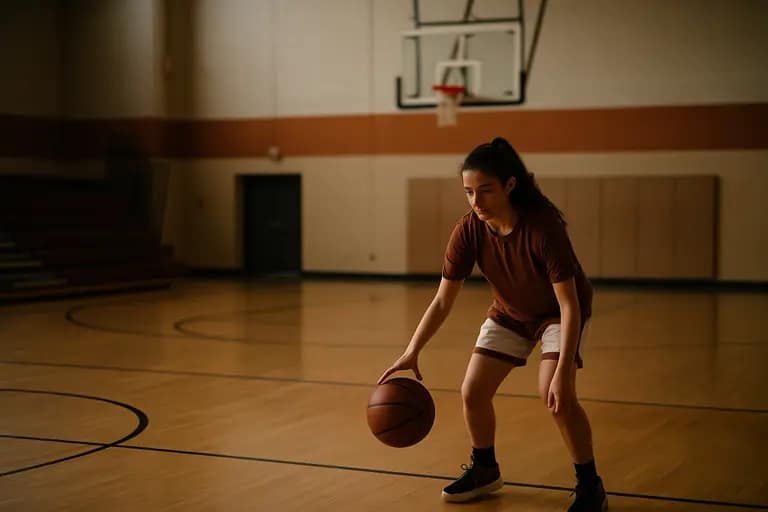
The girls game deserves a specific place in this discussion. The Associated Press reported that girls high school basketball participation nationally fell from 451,600 players in 2000 to 356,240 players in 2025, a decline of at least 21%, while Texas participation dropped from about 70,427 players in 1999-2000 to 44,953 in the 2024-25 academic year, a 36% decline according to AP participation reporting.
Those numbers should concern anyone who cares about Texas basketball. The state has produced high-level girls players, strong high school programs and competitive club teams, but participation drops create a smaller base. A smaller base means fewer late bloomers, fewer multi-sport athletes staying in the game and fewer communities with deep rosters.
Exposure events cannot solve that issue alone. Participation depends on school support, coaching quality, youth leagues, cost, transportation, family interest and whether girls see a clear place for themselves in the sport. Events can help if they make girls divisions visible, organized and worth the time for families and coaches.
Visibility Has To Be Matched By Belonging
Visibility is not only about college scouts. Younger athletes need to see older girls competing in serious games with real crowd energy. They need to see coaches investing in skill development. They need events where the girls side does not feel like an afterthought.
That is a community challenge as much as an event challenge. Schools, local clubs, trainers and organizers should treat girls basketball as part of the main basketball calendar. If exposure events can create better competitive opportunities and more public attention, they can support retention. The key is making sure the experience feels consistent, respected and connected to local programs.
What Exposure Events Mean For Texas Hoops Communities
The lasting value of OTR Exposure Events will be measured by more than team counts or weekend traffic. The stronger question is whether these events help Texas players return to their schools sharper, more confident and more connected to the game.
For boys and girls programs, the opportunity is clear. Exposure basketball can widen evaluation, raise competitive standards and bring families together around local gyms. It can also create pressure if families feel forced to chase every event. The best path is selective and purposeful: play events that match the athlete’s stage, learn from the competition and keep development tied to daily habits.
Texas high school basketball grows when communities see the whole picture. Players need coaching. Teams need identity. Families need access. Girls programs need sustained attention. Local gyms need events that bring people through the doors for the right reasons. Exposure basketball is not the entire answer, but when it is organized with care, it can become a useful part of the state’s player-development pipeline and a real gathering point for basketball communities.