


Shoot 360 Austin is scheduled to host a free basketball clinic and open house on Tuesday, October 27, 2026, giving Central Texas players and parents a clear entry point into skill work, training technology and a local basketball community. The two-hour event, hosted by the Texas Sports Academy Community, is set for 1 p.m. to 3 p.m. at 2081 South Highway 183 in Leander, according to the event listing.
For players in grades 3 through 12, the clinic’s value starts with access. Registration is free for participating students, and accompanying adults do not need a ticket. That matters for families who may be weighing training costs, school fit, homeschool connections or a child’s first serious step into organized basketball development.
Shoot 360 Austin Clinic Details For Families
Shoot 360 Austin Schedule And Access
The clinic is built as both an open house and an active basketball session. Students are expected to reserve a free ticket for planning purposes, while parents and other accompanying adults may come as guests without registering for a separate ticket. The event information identifies the audience as students in grades 3 through 12, including homeschool students, Texas Sports Academy students and families interested in learning more about the Academy community.
The time slot, 1 p.m. to 3 p.m. on October 27, places the session in a manageable two-hour window. That format is short enough for families testing a new training environment, yet long enough for players to get on the floor, meet the staff and experience the setting beyond a quick tour.
- Date: Tuesday, October 27, 2026
- Time: 1 p.m. to 3 p.m.
- Location: 2081 South Highway 183, Leander, Texas 78641
- Eligible players: Students in grades 3 through 12
- Cost: Free for participating students
- What students should bring: Basketball attire, basketball shoes and a water bottle
What The Open House Adds
The open house piece should not be treated as a side note. Parents often need to see how a training space operates before deciding whether it fits a child’s needs. They want to know whether the environment is organized, whether instruction is age-appropriate and whether the setting feels comfortable for newer players as well as more experienced athletes.
For the players, the clinic can answer a different question: does this type of training help them understand their own game? A young guard may care about shooting rhythm. A wing may want footwork feedback. A post player may be learning how modern spacing changes shot selection. A free first session gives those players a way to test the environment without a financial barrier at the door.
Why A Free Clinic Matters For Player Development
A Low-Barrier First Rep
A free clinic cannot replace a full season of practices, games, strength work and coaching. Its value is different. It gives players an early rep in a structured setting, and it gives families a chance to observe how their child responds to instruction outside a school gym or neighborhood court.
That first experience can be especially useful for younger players. Grades 3 through 12 cover a wide development range, from athletes still learning basic footwork to high school players sharpening shooting habits. The event’s stated welcome to all experience levels matters because not every family arrives with the same basketball background. Some students may already play club ball. Others may be testing whether they enjoy the sport enough to pursue more training.
That is where local access becomes part of the larger Texas basketball story. Central Texas families often balance school schedules, commute times, club fees and weekend tournaments. A free session close to home can help families make better decisions before committing to longer-term training. It also fits the same community-access theme seen across Texas youth basketball access, where low-cost and free events help widen the player pipeline.
Parents Get A Development Checkpoint
Parents are part of the development process, even when they are not coaching from the sideline. They handle transportation, manage schedules, pay fees and help young athletes decide how much time to commit. This open house gives parents a chance to meet other homeschool and Texas Sports Academy families in the Austin area, according to the event information.
That social piece has practical sports value. Families often learn about leagues, school options, training routines and tournament expectations from other parents. For new basketball families, that can reduce confusion. For experienced families, it can create stronger local ties around player development rather than leaving everyone to sort through choices alone.
The event also gives parents a chance to watch how their children handle feedback. Does the player listen between reps? Does the player ask questions? Does the player stay engaged when a drill becomes difficult? Those observations can be more useful than a highlight clip because they show habits that matter over a full season.
Technology Can Support Coaching, Not Replace It
What Shot Feedback Can Show
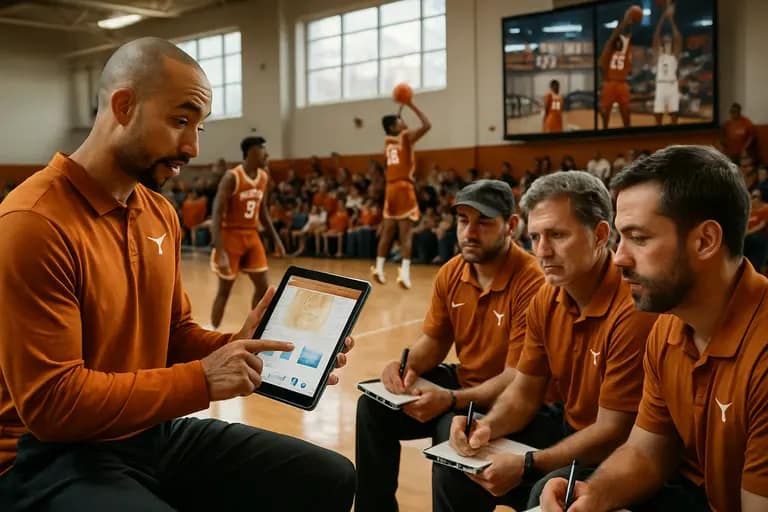
The clinic is expected to introduce families to shooting and training technology. Shoot 360 describes its network as using proprietary basketball training systems, including shot-tracking analytics, motion-tracking cameras and feedback tools designed to support skill development on the Shoot 360 site.
For young players, that type of feedback can make certain habits easier to see. A missed shot is not always just a miss. It may come from balance, release angle, foot placement, rushed timing or poor preparation before the catch. Data and video feedback can help a player connect a result to a repeatable habit.
Still, technology works best when it supports coaching rather than replacing it. Players need someone to help translate information into a clear practice goal. A number on a screen may show a pattern, but a coach can help the athlete decide what to fix first and how to carry that change into live play.
Keeping The Player First
The best use of training technology is not to overwhelm a young athlete with too much information. It is to make practice more specific. A middle school player may only need one focus point, such as getting feet set earlier. A high school player may be ready for deeper feedback on shot consistency, decision speed or fatigue late in workouts.
The clinic at Shoot 360 Austin can help families see that difference in person. A player who loves feedback may be motivated by measurable progress. Another player may need more encouragement and simpler cues. Parents should watch not only the tools, but also how their child responds to the teaching environment.
That player-first view is especially important in a region with many routes into basketball. Some students come through public school programs. Others come through private schools, homeschool groups, club teams, recreation leagues or skill trainers. A facility-based clinic can serve as one connection point, but the development path still depends on consistent practice and the right competitive level for each athlete.
What Shoot 360 Austin Means For Local Basketball
A Community Entry Point
The strongest local impact of this event may be its mix of basketball and community building. A free clinic lowers the first barrier. An open house helps parents ask questions. A shared gym gives homeschool families, Texas Sports Academy families and interested students a place to meet around the sport rather than only through school or tournament schedules.
In Texas basketball, those connections matter. Player growth is rarely shaped by one workout. It comes from repeated touches, steady coaching, family support and competitive chances that fit the athlete’s stage. Events like this can help families find the next step, whether that means more training, a school conversation, a team setting or simply a better understanding of what the player enjoys.
Why The October 27 Clinic Carries Local Value
Shoot 360 Austin offers a specific moment for Central Texas families to evaluate basketball development in a low-pressure setting. The event is free for students, open to a wide grade range and built around both instruction and parent connection. Those details make it more than a facility preview.
For young players, the October 27 clinic can turn curiosity into a clearer plan. For parents, it can answer practical questions about training style, community fit and how their child handles a structured basketball environment. For the local basketball scene, it adds another access point in a state where player development often depends on which families can find the right gym, coach and schedule at the right time.