


The Triston Hawthorne Commitment became official on September 17, 2026, giving Houston a four-star power forward in the 2027 class and another reason for local fans to track the program’s next roster build with real interest. Hawthorne, the No. 1 prospect in Mississippi, chose Houston after a recruitment that included Ole Miss and Mississippi State, according to a Yahoo Sports report.
For a Houston program that has built much of its modern identity around physical defense, rebounding and player development, this is not just a star-rating story. Hawthorne’s profile points toward the kind of frontcourt piece who can fit a demanding system without needing to be a high-usage scorer right away. His junior production at South Jones High School in Ellisville, Mississippi — 10.5 points, 12 rebounds and 6.2 blocks per game — shows a player already impacting possessions through size, timing and activity.
That matters for Houston supporters because recruiting wins are often judged too quickly by highlight scoring. Hawthorne’s value is tied to the plays that shape a possession before a box score headline appears: contesting shots, finishing defensive stands with rebounds, changing angles at the rim and creating second chances on the offensive glass. Those traits can travel well from high school basketball into a college development setting, even as his offensive role grows.
Why The Triston Hawthorne Commitment Fits Houston
Recruiting Value Beyond State Lines
Houston landing Mississippi’s top-rated player carries meaning beyond one roster spot. Texas college basketball programs recruit nationally because frontcourt size, defensive instincts and length are hard to find in every cycle. Pulling a four-star power forward from Mississippi shows that Houston’s reach is not limited to local or in-state talent pools.
For fans in Houston, that kind of recruiting result supports the idea that the program’s identity is now visible outside Texas. Prospects and families are not only evaluating arena atmosphere or conference exposure. They are also studying whether a staff can explain role, development and fit. Hawthorne’s decision suggests Houston made that case clearly enough to beat schools much closer to home.
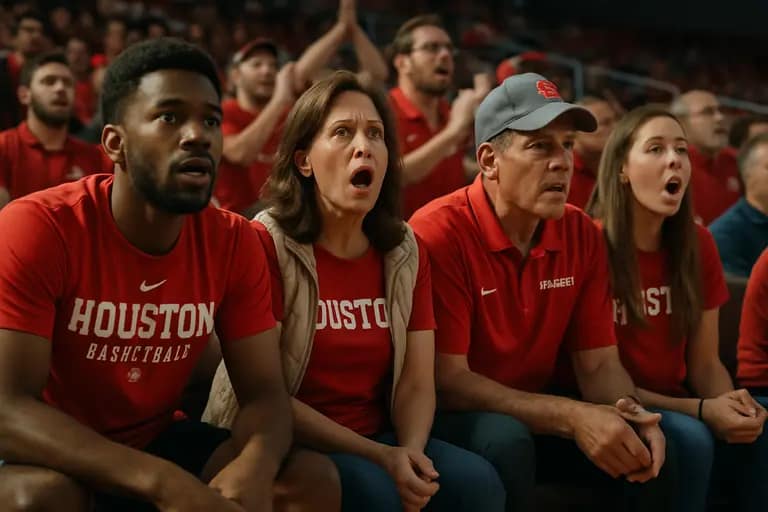
There is also a local fan angle here. Houston basketball has become a year-round conversation, not just a winter schedule. Commitments like this give alumni, students, high school coaches and youth players a reason to follow roster construction well before a recruit arrives on campus. That keeps the program connected to the city’s basketball community between seasons.
Triston Hawthorne Commitment And Defensive Value
Hawthorne is listed at 6-foot-7 and 190 pounds with a reported 7-foot-2 wingspan, and he told On3 that Houston showed transparency, built strong relationships and explained how he would fit in its system in an On3 commitment story. Those details matter because long forwards must usually learn several defensive jobs at the college level.
At his size, Hawthorne projects as more than a stationary rim protector. His shot-blocking numbers point to timing, but Houston will ask more than that from a frontcourt player. He will need to defend screening actions, rebound outside his immediate area, run the floor and avoid fouls while still playing with force. The 7-foot-2 wingspan gives him a wider defensive margin, but college success will depend on strength, technique and how quickly he processes rotations.
That is why the Triston Hawthorne Commitment looks like a fit rather than just a talent grab. Houston has often valued players who win possession battles. Hawthorne’s junior averages already show that he can influence games without needing a large scoring load. If that translates, he can help the Cougars maintain the kind of defensive pressure that has made the program difficult to play against.
How Hawthorne Could Shape The Frontcourt
Rebounding As A Path To Early Trust
The clearest early path for Hawthorne is rebounding. A player who averaged 12 boards per game as a junior has already shown appetite for contact and positioning. In college basketball, that skill often earns trust faster than a developing offensive package because coaches can use it in any lineup.
Houston’s frontcourt standards are demanding. Bigs and forwards are expected to screen, pursue loose balls, protect the paint and keep possessions alive. Hawthorne’s production at South Jones suggests he understands that games can swing on repeat effort rather than a single scoring burst. That should resonate with a fan base that has seen winning Houston teams built on toughness and defensive consistency.
His 6.2 blocks per game also deserve careful reading. Shot-blocking totals in high school do not guarantee the same rate in college because spacing, strength and guard play change. Yet the number still identifies a defensive instinct. Hawthorne has shown he can anticipate attempts near the rim and use his length to alter outcomes. The next step will be learning when to challenge, when to wall up and when to stay attached to his assignment.
Offensive Growth Without Rushing The Role
Hawthorne’s scoring average of 10.5 points per game does not frame him as a finished offensive centerpiece. That should not be viewed as a problem. For Houston, the more relevant question is whether he can develop into a reliable finisher, screener and offensive rebounder before expanding his shot creation.
A frontcourt player can help a high-level college offense by doing simple things with precision. Strong screens create space for guards. Quick decisions after catches keep the ball moving. Putbacks punish teams that fail to finish defensive stands. Rim runs pressure transition defense. Those are practical ways for Hawthorne to earn minutes while his broader skill set matures.
The Triston Hawthorne Commitment also gives Houston time to develop a player with a clear physical base. He is a 2027 prospect, so the staff will continue evaluating how his body, skill and game understanding progress before he arrives. Fans should resist treating him as a finished product. The better read is that Houston added a long, productive forward whose best college basketball could come after patient strength and skill work.
What Houston Fans Should Take From The Recruiting Win
A Signal For The 2027 Class
Hawthorne’s pledge adds another high-profile name to Houston’s 2027 planning. Recruiting classes are never complete on commitment day, and rosters can change before a prospect plays his first college game. Still, this decision gives Houston a frontcourt anchor type to build around as the staff balances guards, wings and bigs across future classes.
- Hawthorne brings a four-star recruiting profile and a No. 1 state ranking in Mississippi.
- His junior season production points to rebounding and rim protection as early strengths.
- His reported length gives Houston a defensive tool that can fit multiple frontcourt roles.
- His comments about fit and development suggest the staff connected basketball plans with personal growth.
For the local basketball community, the most meaningful part may be the fit between prospect and program. Houston does not need every recruit to arrive as a polished scorer. It needs players willing to defend, compete and improve. Hawthorne’s current profile aligns with that approach.
Why Patience Matters With Frontcourt Recruits
Frontcourt development is rarely instant. Young forwards often need time to add strength, improve footwork and adjust to faster decision-making. Hawthorne’s length and rebounding give him a foundation, but Houston’s staff will still need to shape the details: defensive angles, screen technique, foul discipline and finishing through contact.
That is where program culture becomes more than a recruiting phrase. Hawthorne cited academic and personal development as part of Houston’s appeal, according to On3. Those factors matter because the jump from high school standout to college contributor requires daily habits. The weight room, film room and classroom all become part of the adjustment.
For fans, the fair expectation is not immediate stardom. The fair expectation is that Hawthorne enters Houston’s system with traits the staff values and a chance to grow into a frontcourt contributor. If he becomes dependable defensively first, his offensive confidence can follow.
What The Triston Hawthorne Commitment Signals In Houston
For Houston supporters, the Triston Hawthorne Commitment signals that the Cougars can continue winning recruiting battles that match their basketball identity. Hawthorne is not just a name on a rankings sheet. He is a long, productive forward whose strongest high school traits line up with defense, rebounding and rim protection.
The local significance is clear. Houston fans have watched the program build credibility through effort-based basketball, and Hawthorne gives the next wave of players another frontcourt piece who appears comfortable in that type of environment. His choice also reinforces Houston’s ability to recruit outside Texas while still serving a Texas basketball audience that values toughness and development.
The next step is growth. Hawthorne will need to keep adding strength, improve his offensive polish and prepare for the speed of college basketball. Houston, in turn, will need to keep showing the same clarity of role that helped win his commitment. If both sides follow that path, this September 17 decision could be remembered as a meaningful addition to the Cougars’ 2027 foundation.